
Reconstructing Northern Warrior Physical Culture into a Modern UNESCO-Based Educational System
International Northern Ssireum Federation (INSF) Traditional Wrestling Studies
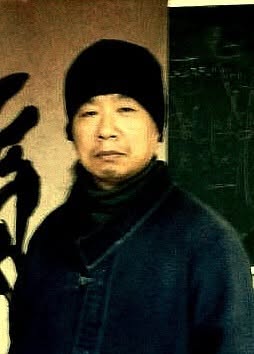
Song Jun-ho
International Northern Ssireum Federation (INSF) President
Abstract
Traditional wrestling systems have survived across Eurasia for centuries; however, most remain competition-oriented rather than education-oriented. Unlike Karate, Judo, Taekwondo, and Brazilian Jiu-Jitsu, traditional wrestling has rarely developed standardized instructor curricula suitable for global transmission.
This study introduces the INSF Master Curriculum, a twelve-week educational framework that reconstructs Northern Warrior Physical Culture into a systematic training program based on UNESCO Representative List Ssireum, comparative Silk Road wrestling traditions, and historical Korean martial practices.
Rather than presenting isolated wrestling techniques, the curriculum integrates breathing methods, body conditioning, ground reaction force, traditional lifting, stone throwing, livestock control, standing grappling, open-hand techniques, and instructor education into one unified pedagogical system.
The curriculum also compares Korean Northern Ssireum with Iranian Varzesh-e Bastani, Pakistani Kushti, Mongolian Bökh, Turkish Oil Wrestling, and other traditional martial systems to establish biomechanical and educational similarities while preserving the identity of Northern Ssireum.
| Author Profile |
| Name: Song Junho (송준호) Country: Republic of Korea Position: International Chairman, International Northern Ssireum Federation (INSF) Professional Profile: • Successor of UNESCO Representative List Ssireum (Northern Style, 2018) • International Chairman, International Northern Ssireum Federation (INSF) • Researcher in Northern Ssireum, Silk Road Warrior Physical Culture, and Traditional Wrestling Studies • Author of multiple books published through Amazon (USA) • Conducts international comparative research on traditional wrestling, martial arts, and warrior physical culture across Eurasia |
Keywords
Northern Ssireum
Warrior Physical Culture
UNESCO
Traditional Wrestling
Silk Road
Physical Education
Instructor Curriculum
1. Introduction
Traditional wrestling is one of humanity’s oldest forms of physical culture.
Across the Silk Road, nearly every civilization developed its own standing wrestling tradition.
Examples include:
- Korean Ssireum
- Mongolian Bökh
- Iranian Koshti
- Pakistani Kushti
- Turkish Yağlı Güreş
- Central Asian Kurash
Although these traditions possess rich historical value, most modern instruction remains focused on preparing athletes for competition rather than educating instructors through structured curricula.
Modern martial arts such as Karate, Judo, Taekwondo, and Brazilian Jiu-Jitsu became global not merely because of their techniques but because they introduced systematic educational frameworks consisting of:
- breathing
- basic techniques
- conditioning
- partner practice
- forms (kata)
- sparring
- instructor certification
- rank systems
Traditional wrestling generally lacks such educational organization.
The International Northern Ssireum Federation (INSF) therefore proposes an integrated instructor curriculum based upon Northern Warrior Physical Culture rather than competition alone.
The objective is not to invent new techniques but to organize historically documented physical practices into a coherent educational system.
2. Historical Background of Northern Ssireum
Northern Ssireum represents one historical stream of Korean wrestling traditions.
Historical evidence suggests that various regional wrestling styles existed throughout the Korean Peninsula before modernization.
During the Japanese colonial period, regional competition rules were gradually standardized, leading to the modern Southern competition style that became dominant after liberation.
Many regional traditions subsequently disappeared.
However, Northern-style practices continued to survive through communities of northern migrants who relocated from North Korea to South Korea after the division of the peninsula.
INSF identifies this tradition as Northern Ssireum and studies it within the broader context of Eurasian steppe warrior culture.
3. Northern Warrior Physical Culture
The curriculum does not define Northern Ssireum solely as wrestling.
Instead, it views wrestling as one component within a broader warrior physical culture.
Historical practices include
- breathing
- body conditioning
- lifting natural stones
- animal handling
- stone throwing
- standing wrestling
- open-hand techniques
Individually these activities are not unique.
Similar methods appear in numerous martial traditions throughout Eurasia.
Their uniqueness lies in their integration into one coherent educational philosophy centered on the physical culture of Northern warriors.
Thus, the INSF curriculum organizes these historical elements into a modern instructional sequence.
4. Standing Wrestling and Traditional Hand Techniques
One distinctive characteristic preserved in Northern Ssireum concerns controlled hand techniques.
In the present Northern style, competitors are permitted to create space by
- pushing the opponent’s face with the palm
- pushing the neck
- controlling posture before executing throws
During the 2017 academic conference jointly organized with the Department of Physical Education at Yanbian University (China), researchers documented an additional technique involving striking the back of the opponent’s neck with the knife-edge of the hand before applying grappling control.
This movement resembles the traditional hand strike preserved in classical Karate.
Historical French publications describing Korean Ssireum during the Joseon Dynasty also record that hand strikes were practiced together with wrestling.
These observations suggest that earlier forms of Northern Ssireum may have preserved a competitive environment in which controlled striking and standing grappling coexisted before the clear separation between striking arts and wrestling found in many modern combat sports.
Unlike modern striking systems, these hand techniques were performed through mutual agreement between practitioners.
Their purpose was to facilitate grappling and off-balancing rather than produce knockout power.
5. INSF Master Curriculum
The INSF Master Curriculum consists of four progressive phases over twelve weeks.
Unlike athlete-centered wrestling programs, the curriculum emphasizes instructor education, biomechanical understanding, historical awareness, and cultural transmission.
Phase 1
Warrior Foundation
Weeks 1–3
Core education includes
- Breath Exhalation
- Danjeon breathing
- Horse Stance Tree-Hugging
- Body Tempering
- Ground Reaction Force
Comparative analysis examines the relationship between Korean power generation methods and the Baithak conditioning system of Pakistani and Indian Kushti.
Phase 2
Warrior Movement
Weeks 4–6
Students study
- Haebo (Crab-Walking Footwork)
- Ground-to-Pelvis Integration
- Cattle and Horse Subdual
- Stone Throwing
Comparative research analyzes similarities and differences between Haebo and the Eagle Dance footwork of Mongolian Bökh.
Phase 3
Completion of Offense and Defense
Weeks 7–9
Students learn
- Traditional Deul-dol lifting
- Northern Ssireum’s Three Great Throwing Systems
- Hand Techniques
- Leg Techniques
- Waist Techniques
- Practical application of Ground Reaction Force
- Yu-neung-je-gang (softness overcoming hardness)
Comparative studies examine Iranian Varzesh-e Bastani conditioning methods.
Phase 4
Instructor Integration
Weeks 10–12
Students complete
- Warrior Integration Kata
- UNESCO cultural rituals
- Teaching methodology
- Comparative pedagogy
- International instructor evaluation
Special attention is given to communicating Eastern breathing methods and Ground Reaction Force using modern biomechanical terminology.
6. Educational Philosophy
The INSF curriculum does not claim ownership of individual training methods.
Breathing,
stone lifting,
body conditioning,
animal handling,
and standing wrestling all appear independently in numerous martial traditions.
The innovation of INSF lies in organizing these historically documented practices into a standardized educational model inspired by Northern Warrior Physical Culture.
This approach transforms traditional wrestling from an athlete-centered activity into a structured instructor education system comparable to those found in global martial arts.
7. Discussion
The globalization of Karate, Judo, Taekwondo, and Brazilian Jiu-Jitsu demonstrates that educational systems often determine international success more than technical diversity.
Traditional wrestling has historically emphasized competition rather than pedagogy.
The INSF curriculum seeks to bridge this gap by providing
- standardized instruction
- historical interpretation
- comparative cultural education
- instructor certification
- international teaching methodology
This educational framework also creates opportunities for UNESCO-based cultural transmission rather than competition alone.
8. Conclusion
Northern Ssireum should not be understood merely as a regional wrestling style.
It represents a broader educational reconstruction of Northern Warrior Physical Culture integrating historical Korean traditions with comparative Silk Road martial practices.
The INSF Master Curriculum demonstrates how breathing, conditioning, biomechanics, standing wrestling, controlled hand techniques, and cultural education can be systematically organized into a modern international instructor training program.
Rather than replacing traditional wrestling systems, this framework provides an educational model through which traditional physical culture may be preserved, transmitted, and adapted for future generations under the principles of UNESCO Intangible Cultural Heritage.
Project Framework
This paper was prepared as part of the INSF Traditional Wrestling Research Project, an international research initiative coordinated by the International Northern Ssireum Federation (INSF). The project promotes the documentation, preservation, and comparative study of indigenous wrestling traditions and warrior cultures from participating countries. National advisors and collaborating researchers contribute country-specific research within the framework of this international academic initiative.
© 2026, 편집부. All rights reserved. 모든 콘텐츠(기사)에 대한 무단 전재ㆍ복사ㆍ배포 등을 금합니다.


