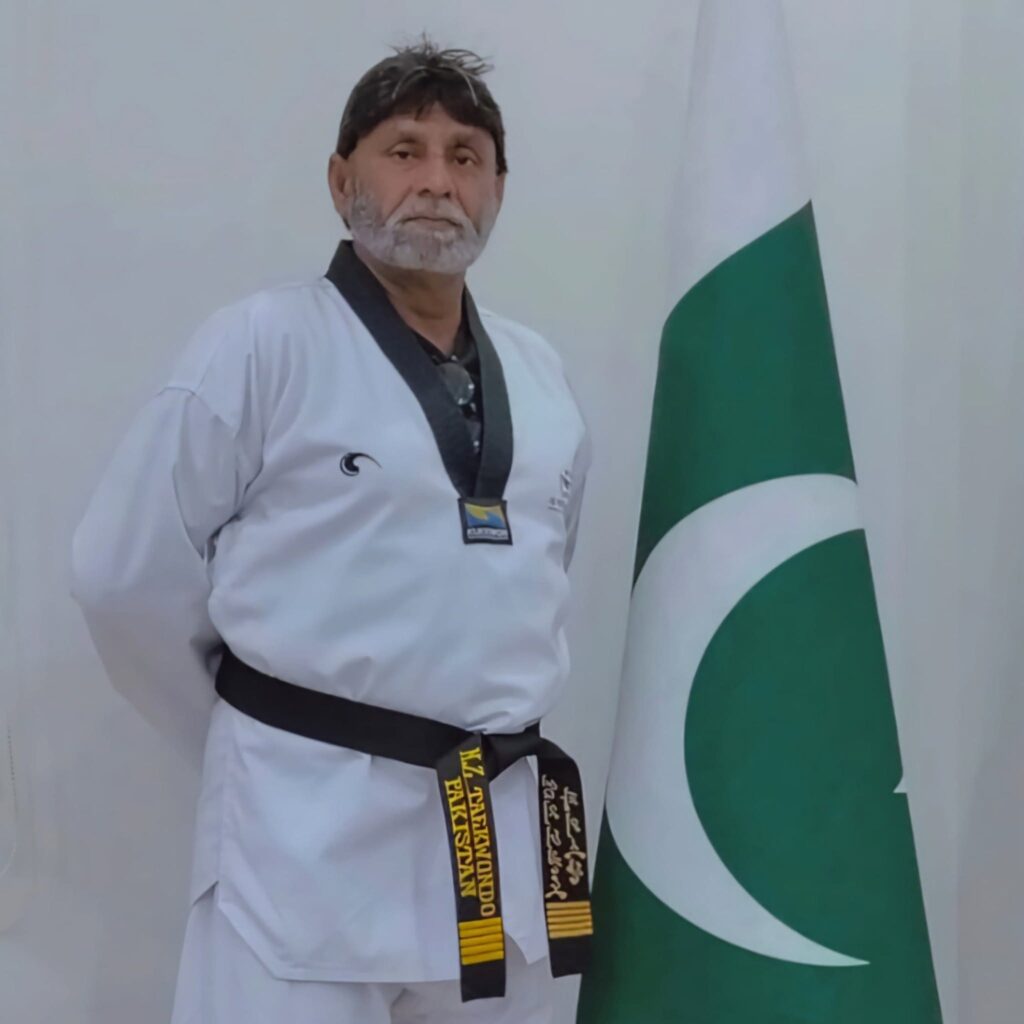
Muhammad Zahid is an International Advisory Board Member of the International Northern Ssireum Federation (INSF) and a researcher dedicated to the preservation and promotion of the traditional wrestling heritage of Pakistan and the Indian subcontinent. His academic interests focus on Kushti (Pehlwani), the legacy of Gama Pehlwan, traditional physical conditioning, and the historical relationship between South Asian wrestling traditions and the broader Silk Road warrior physical culture. Through comparative research.
From Village Legends to the Legacy of Gama Pehlwan
International Northern Ssireum Federation (INSF) Traditional Wrestling Studies
Muhammad Zahid
International Northern Ssireum Federation (INSF) International Advisory
NSF Traditional Wrestling Research Project
Published by the International Northern Ssireum Federation
INSF Academic Series
Volume 9
1. Introduction
Traditional wrestling has occupied an important place in the social and cultural history of the Punjab region for centuries. Known as Pehlwani, this indigenous wrestling tradition developed through the interaction of ancient Indian physical culture and later Persian influences, eventually becoming one of South Asia’s most respected systems of traditional wrestling. More than a competitive sport, Pehlwani functioned as a comprehensive institution for physical education, moral discipline, and community leadership.
Historically, Punjabi villages maintained akharas (traditional wrestling schools), where young men received systematic training in strength, endurance, discipline, and ethical conduct. Wrestlers were expected not only to demonstrate physical superiority but also to embody humility, honesty, generosity, and respect for their communities. Successful wrestlers often became local leaders whose reputations extended far beyond athletic achievement.
Although The Great Gama (Ghulam Mohammad Baksh Butt) has received considerable international attention for his extraordinary undefeated career and legendary physical conditioning, numerous regional wrestlers also played essential roles in preserving and transmitting the Pehlwani tradition. Among these figures, Prem Singh, better known as Kekar Singh Pehlwan, occupies a distinctive place within the oral history of Punjab.
Unlike Gama, whose achievements were widely documented through newspapers and sporting records, Kekar Singh survives primarily through community memory, oral narratives, and local historical accounts. Stories describing his extraordinary physical strength, moral character, and wrestling ability continue to be passed from generation to generation in villages surrounding Amritsar and the Attari region. Such narratives represent valuable examples of intangible cultural heritage because they preserve local identity, historical memory, and traditional values even in the absence of extensive written documentation.
This study therefore shifts attention from internationally celebrated champions toward the local communities that sustained Punjabi wrestling culture. By examining the life of Prem Singh (Kekar Singh Pehlwan), the historical environment of traditional Punjabi wrestling, and the later achievements of The Great Gama, this paper seeks to demonstrate how village wrestlers contributed to the continuity of one of South Asia’s oldest living martial traditions.
Rather than viewing Pehlwani solely as a form of athletic competition, this research interprets it as a cultural institution that integrated physical training, ethical education, folklore, and community cohesion. Through historical sources, oral traditions, and documented accounts of famous wrestlers, the study contributes to a broader understanding of Punjabi wrestling as an important component of the intangible cultural heritage of the Indian subcontinent.
Research Objectives
This study pursues four primary objectives:
- To document the historical background of Punjabi Pehlwani and its social functions.
- To reconstruct the life and oral traditions surrounding Prem Singh (Kekar Singh Pehlwan).
- To examine the achievements of The Great Gama within the broader context of Punjab’s wrestling culture.
- To evaluate the cultural significance of Pehlwani as a living example of traditional physical culture and intangible cultural heritage.
2. Historical Development of Punjabi Pehlwani
2.1 Origins of Traditional Wrestling in Punjab
Traditional wrestling in Punjab, commonly known as Pehlwani, represents one of the oldest continuously practiced physical traditions in South Asia. Its origins extend back to the ancient Indian wrestling system known as Malla-yuddha, which emphasized not only combat skills but also physical conditioning, moral discipline, and spiritual development. From the medieval period onward, interactions between the Indian subcontinent and Persia through trade, migration, and military exchange gradually transformed indigenous wrestling into the hybrid system later recognized as Pehlwani.
Unlike modern Olympic wrestling, Pehlwani developed as a complete way of life. Wrestling schools, called akharas, served simultaneously as training centers, educational institutions, and community gathering places where young men learned physical fitness, ethical conduct, and social responsibility. Strength alone was never regarded as sufficient; wrestlers were expected to demonstrate humility, honesty, discipline, and respect for elders.
2.2 The Akhara System
The akhara formed the foundation of Punjabi wrestling culture. Every village or town with a strong wrestling tradition maintained at least one training ground where experienced masters instructed younger generations.
Daily training generally began before sunrise and included:
- Baithaks (deep squats) performed in extremely high repetitions.
- Dands (traditional push-ups) designed to strengthen the entire kinetic chain.
- Running and endurance exercises.
- Rope climbing.
- Sand pit wrestling practice.
- Flexibility and breathing exercises.
- Massage and recovery using natural oils.
Training took place primarily on prepared earth or clay pits rather than wooden floors or mats. Wrestlers believed that continuous contact with natural soil strengthened both the body and character while reducing injuries.
The guru (master) supervised not only physical instruction but also the moral education of students. Respect for teachers, discipline in daily life, and service to the community formed essential components of training.
2.3 Wrestling as Community Culture
In rural Punjab, wrestling occupied an important social function beyond athletic competition. Matches were commonly organized during religious festivals, harvest celebrations, village fairs, and public ceremonies.
Victorious wrestlers gained prestige not through financial rewards but through public recognition and community respect. Champions frequently became symbols of courage and integrity within their villages.
Traditional wrestling also served several practical purposes:
- Physical preparation for agricultural labor.
- Development of courage among young men.
- Peaceful competition between neighboring villages.
- Preservation of local identity and cultural traditions.
- Promotion of mutual respect despite competitive rivalry.
Consequently, Pehlwani functioned as both physical education and social education.
2.4 Physical Conditioning and Traditional Lifestyle
One defining characteristic of Punjabi wrestling was its comprehensive approach to physical conditioning. Wrestlers viewed strength as the product of disciplined daily living rather than isolated exercise.
Historical accounts describe several common elements:
- High-volume bodyweight conditioning.
- Heavy lifting using natural stones and agricultural equipment.
- Consumption of fresh milk, butter, almonds, clarified butter (ghee), and seasonal foods.
- Strict daily routines with sufficient sleep and recovery.
- Avoidance of alcohol and other habits considered detrimental to physical performance.
The objective was to develop functional strength, endurance, balance, and resilience rather than muscular appearance alone.
2.5 Legendary Wrestlers and Oral Tradition
Prem Singh 13 January 1857
The history of Punjabi wrestling has been preserved through both written records and oral traditions. While internationally renowned wrestlers such as The Great Gama (Ghulam Mohammad Baksh Butt) became famous through newspapers and sporting competitions, many regional champions survived primarily through community memory.
One such figure was Prem Singh, later known as Kekar Singh Pehlwan.
According to local oral tradition, Prem Singh acquired the name “Kekar Singh” after displaying extraordinary physical strength by dragging an enormous uprooted tree from the forest back to his village. Villagers, astonished by this feat, gradually abandoned his birth name and referred to him simply as Kekar Singh throughout his life.
Although such accounts cannot always be verified through archival documentation, they constitute valuable examples of oral intangible cultural heritage, reflecting how communities preserved the memory of exceptional wrestlers through storytelling across generations.
These narratives illustrate that physical strength alone did not define a great wrestler. Local traditions consistently portray Kekar Singh as compassionate, deeply religious, generous, and respectful toward others, suggesting that moral character remained inseparable from athletic excellence within Punjabi wrestling culture.
2.6 Continuity and Modern Significance
Despite the modernization of competitive wrestling during the twentieth century, many elements of traditional Pehlwani continue to survive in Punjab through local akharas, family traditions, and cultural festivals.
Today, historians increasingly recognize Pehlwani not merely as a combat sport but as an important component of South Asia’s living cultural heritage. Its training methods, ethical philosophy, oral narratives, and community institutions collectively represent a valuable historical record of indigenous physical culture.
Understanding figures such as Prem Singh (Kekar Singh Pehlwan) alongside internationally celebrated champions like The Great Gama allows a more balanced reconstruction of Punjabi wrestling history—one that acknowledges both legendary individuals and the village communities that sustained this remarkable tradition for generations.
3. Legendary Warriors of Punjab: Kekar Singh and Gama Pehalwan
Fresco depicting Kikkar Singh (right) pitted against his great rival, Ghulam Pahelwan (left), decorating the gateway of Jand village in Ludhiana district, Punjab: From Wikipedia
3.1 Prem Singh (Kekar Singh Pehalwan): A Folk Hero of Punjab
Among the legendary wrestlers of the Punjab region, few names remain as deeply rooted in local oral tradition as Prem Singh, later known as Kekar Singh Pehalwan.
Prem Singh was born into a Jat family in the Attari area near Amritsar. Contemporary accounts describe him as a wrestler of extraordinary physical strength, but equally emphasize his religious devotion, generosity, and willingness to help ordinary villagers.
Unlike many athletes remembered only for victories, Kekar Singh survived in regional memory through folklore.
According to local tradition, his mother once asked him to collect firewood from the nearby forest. While returning home, he encountered an enormous uprooted tree (known locally as a Kekar tree). Rather than cutting it into pieces, he lifted the entire trunk onto his shoulder and dragged it back toward the village.
As the massive tree approached, villagers believed it was moving by itself because Prem Singh’s body was hidden beneath the enormous trunk. Only after he dropped the tree before his house did the villagers realize that one man had carried it alone.
From that day onward, people no longer called him Prem Singh. Instead, he became universally known as Kekar Singh Pehalwan, a name symbolizing superhuman strength and courage.
Although the story cannot be verified as historical fact, it demonstrates an important feature of Punjabi wrestling culture: outstanding wrestlers were remembered not merely as athletes but as cultural heroes whose strength became part of local identity.
3.2 The Great Gama: The Symbol of Pehlwani
No discussion of Indian wrestling can omit The Great Gama (Ghulam Mohammad Baksh Butt), who remains one of the most celebrated wrestlers in world history.
Competing during the late nineteenth and early twentieth centuries, Gama established an unmatched reputation by reportedly remaining undefeated throughout a career spanning more than fifty years and over 5,000 wrestling contests.
His achievements include:
- Rustam-e-Hind (Champion of India)
- Rustam-e-Zamana (Champion of the World)
- Recognition as World Heavyweight Champion in 1910
Beyond competition records, Gama became famous for his extraordinary physical conditioning.
Historical sources consistently describe his daily training as including approximately:
- 5,000 Baithaks (deep Hindu squats)
- 3,000 Dands (traditional Indian push-ups)
- intensive grappling practice
- stone lifting
- club swinging
- heavy resistance exercises
His nutritional intake was equally remarkable, reportedly consisting of large quantities of milk, almonds, clarified butter, and high-protein foods designed to sustain extreme physical workloads.
One of the most famous symbols associated with Gama is the enormous 1,200 kg training stone, preserved today in Baroda, India, representing the traditional importance of stone lifting within Pehlwani conditioning.
3.3 Warrior Physical Culture Rather Than Competitive Sport
Both Kekar Singh and Gama illustrate an important characteristic of traditional Pehlwani.
Their reputation was built not solely upon competitive victories but upon demonstrations of total physical capability.
Traditional wrestlers were expected to possess:
- exceptional lifting strength
- endurance
- discipline
- moral character
- service to their community
Consequently, wrestling functioned as part of a broader warrior culture rather than simply as an organized sporting activity.
Large tree lifting, stone carrying, manual labor, and repetitive conditioning exercises were viewed as natural extensions of wrestling preparation.
This cultural perspective closely resembles traditional martial practices found across the Silk Road, where physical conditioning served practical military and social purposes before becoming formalized as sport.
3.4 Significance for Comparative Wrestling Studies
The historical examples of Kekar Singh and Gama demonstrate that traditional wrestling systems preserved throughout the Silk Road shared common educational characteristics.
Their training emphasized:
- body conditioning,
- repetitive strength development,
- natural resistance training,
- community ethics,
- and lifelong discipline.
These elements provide valuable comparative material for understanding broader Eurasian warrior traditions and offer useful historical context for contemporary research on traditional wrestling cultures.
4. The Legacy of Gama Pehalwan and the Scientific Value of Traditional Pehlwani Conditioning
Among the greatest figures in the history of traditional wrestling, Gama Pehalwan (Ghulam Mohammad Baksh Butt) remains one of the most celebrated athletes ever recorded. Competing in the Indian-Pakistani tradition of Pehlwani, Gama maintained an undefeated career spanning more than fifty years and reportedly participated in over 5,000 wrestling matches without suffering a single defeat. Although exact historical records vary, his reputation as one of the strongest and most technically complete wrestlers in history has been consistently preserved throughout South Asia.
Gama received several of the highest honors available to wrestlers of his era, including the titles Rustam-e-Hind (Champion of India) and Rustam-e-Zamana (Champion of the World). On 15 October 1910, he was recognized as the Indian World Heavyweight Champion after defeating many of the strongest wrestlers of the period.
One of the most remarkable demonstrations of his physical strength is associated with the famous 1,200-kilogram stone displayed today at the Sayaji Baug Museum in Baroda, India. Historical accounts describe that at approximately twenty-two years of age, Gama lifted this enormous stone to chest height before carrying it a short distance. Whether interpreted as literal fact or legendary symbolism, the stone has become an enduring cultural icon representing the extraordinary physical culture of traditional Pehlwani.
Unlike many modern strength athletes who rely primarily on specialized gym equipment, Gama’s conditioning reflected the indigenous training methods practiced in the traditional akhara. His daily regimen reportedly included:
- approximately 5,000 Baithaks (traditional Hindu squats);
- approximately 3,000 Dands (traditional Hindu push-ups);
- intensive partner wrestling and resistance drills;
- continuous rope climbing, club swinging, and bodyweight conditioning.
His nutritional intake was equally extraordinary. Historical descriptions record a daily diet consisting of nearly 15 liters of milk, approximately 1.5 pounds of crushed almond paste, clarified butter (ghee), yogurt, seasonal fruits, and other high-protein foods designed to sustain prolonged physical exertion.
From a contemporary sports science perspective, Gama’s training demonstrates several principles now recognized in modern strength and conditioning research. High-volume bodyweight exercise develops muscular endurance, tendon adaptation, cardiovascular capacity, and movement efficiency. The repetitive Baithaks and Dands also promote integrated kinetic-chain coordination, characteristics essential for standing grappling sports.
Traditional Pehlwani conditioning also illustrates the importance of functional movement patterns rather than isolated muscle development. Strength was cultivated through continuous whole-body movement, balance, breathing control, and resistance generated by one’s own body weight or simple traditional equipment.
These historical practices provide valuable comparative material for contemporary research into traditional wrestling cultures. Similar themes—including body conditioning, stone lifting, breathing exercises, natural resistance training, and community-based physical education—can also be found across numerous indigenous martial traditions throughout Asia.
Rather than viewing these practices merely as historical curiosities, they should be recognized as part of the broader intangible cultural heritage of human physical culture. Their continued study contributes not only to sports history but also to discussions concerning traditional knowledge systems, community health, and the preservation of indigenous martial traditions.
Reference Videos
- The Incredible Life and Training of Gama Pehalwan
https://youtube.com/watch?v=wA4PaU9rdGY - Gama Pehalwan: History, Strength and Legacy
https://youtube.com/watch?v=GVxAPPl1gDU
Project Framework
This paper was prepared as part of the INSF Traditional Wrestling Research Project, an international research initiative coordinated by the International Northern Ssireum Federation (INSF). The project promotes the documentation, preservation, and comparative study of indigenous wrestling traditions and warrior cultures from participating countries. National advisors and collaborating researchers contribute country-specific research within the framework of this international academic initiative.
https://zenodo.org/records/21310169
https://www.facebook.com/share/p/1EnW7K6Gdo
© 2026, 편집부. All rights reserved. 모든 콘텐츠(기사)에 대한 무단 전재ㆍ복사ㆍ배포 등을 금합니다.