
Historical Transmission, Indigenous Body Culture, and the Song Chang-ryeol Lineage
Abstract
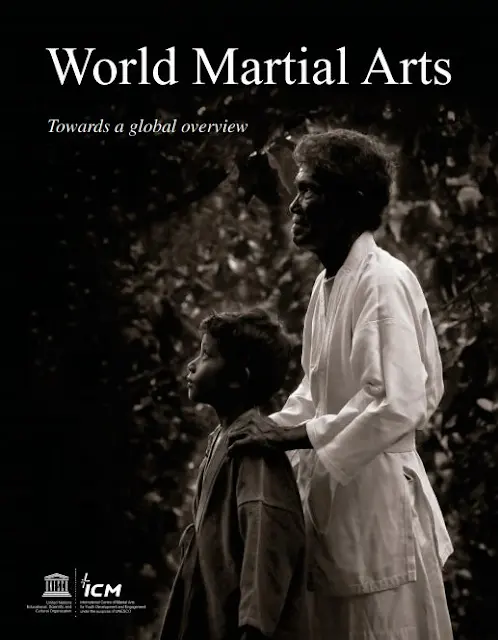
This paper examines the international documentation of Subak within the global martial arts survey published by the International Centre of Martial Arts for Youth Development and Engagement under the auspices of UNESCO, a UNESCO Category 2 international institution dedicated to martial arts research and cultural exchange. The report identifies Subak as a traditional Korean martial art and indigenous body culture characterized by empty-hand combat methods, primitive bodily expression, and historically transmitted practices. The survey additionally references the historical continuity of Subak through the Koguryo mural tradition, the military culture of the Koryo and Joseon dynasties, and the eighteenth-century martial arts manual Muye Dobo Tongji. Particularly significant is the report’s acknowledgement of the modern transmission structure associated with Song Chang-ryeol and the Korea Subak Association. This study analyzes the implications of the survey for the international positioning of Subak as a documented Korean martial tradition and discusses the role of digital archives, visual records, and lineage-based transmission in contemporary preservation efforts.
1. Introduction
Subak is one of the oldest recorded martial traditions of Korea, historically associated with striking, grappling, balance disruption, and body-conditioning practices transmitted through both military and folk traditions. Unlike many modernized combat sports, Subak preserved a rough and direct bodily expression emphasizing practical movement, close-range engagement, and indigenous body culture.
In recent years, international recognition of traditional martial practices has increasingly depended not only on state designation systems but also on documentation within global academic, archival, and cultural heritage networks. Within this context, the inclusion of Subak in the global martial arts survey published by the International Centre of Martial Arts for Youth Development and Engagement under the auspices of UNESCO represents an important moment in the international documentation of Korean martial traditions.
The report does not merely mention Subak as a historical term; it identifies Subak as an indigenous Korean martial art and body culture connected to historical continuity, technical practice, and modern transmission structures.
2. Subak as Indigenous Korean Body Culture
The UNESCO-associated survey describes Subak as:
“a traditional Korean martial art that mainly uses empty-hand techniques” and “a form of expression transmitted as an indigenous art and body culture.”
This characterization is particularly significant because it frames Subak not simply as a combat method but as a cultural body system rooted in Korean historical practice. The report additionally emphasizes physical elements such as:
- bare-chested competition,
- self-striking practices,
- crabwise movement,
- simple but highly trained body mechanics.
These descriptions distinguish Subak from heavily sportified martial systems and instead place emphasis on embodied tradition and physical transmission.
The survey further notes that Subak primarily uses upper-body combat mechanics, corresponding closely with surviving demonstrations associated with the transmission lineage of Song Chang-ryeol and Song Jun-ho.
3. Historical Continuity
The report traces the roots of Subak to early Korean history and references depictions from the Koguryo mural tradition of the fourth century. It additionally cites records from the late Koryo dynasty indicating that Subak was considered an important martial discipline among warriors.
Historical records referenced in the report indicate:
- royal spectatorship of Subak matches,
- military practice among soldiers,
- appointment rewards for successful competitors,
- folk transmission during the Joseon dynasty.
The survey also references the eighteenth-century martial arts manual Muye Dobo Tongji, which contains illustrations and explanations associated with Korean martial traditions. The manual itself was inscribed on UNESCO’s Memory of the World Regional Register for Asia-Pacific in 2017, reinforcing the historical significance of Korean martial documentation.
4. Song Chang-ryeol and Modern Transmission
One of the most important aspects of the survey is its direct reference to the modern transmission structure associated with Song Chang-ryeol.
The report states:
“The Korea Subak Association was founded in 2001 by Song Chang-ryeol.”
This acknowledgement is academically significant because it places Song Chang-ryeol within an internationally documented lineage of modern Subak preservation and transmission.
Visual records, training photographs, television footage, and contemporary demonstrations associated with Song Chang-ryeol reveal recurring characteristics consistent with the survey’s description of Subak:
- rough upper-body engagement,
- balance-breaking methods,
- body conditioning,
- striking integrated with grappling,
- practical close-range combat mechanics.
These elements also appear in historical Korean wrestling and folk combat traditions, suggesting continuity between military, folk, and embodied martial culture.
5. Digital Heritage and International Recognition
In the contemporary era, international recognition increasingly depends on digital preservation systems rather than solely domestic designation frameworks.
Subak has gradually entered international digital heritage networks through:
- Wikimedia Commons archival categorization,
- Wikidata entity structuring,
- English-language research publication,
- video documentation,
- martial arts surveys associated with UNESCO-affiliated institutions.
The emergence of categories such as “Subak practitioners” and “Korean martial artists” within digital archival systems represents more than technical classification; it establishes searchable international knowledge structures linking people, organizations, images, and historical narratives.
Such developments contribute to the long-term preservation of intangible martial culture through decentralized international documentation.
6. Conclusion
The inclusion of Subak in the UNESCO-associated global martial arts survey constitutes an important form of international documentation for Korean martial heritage. The survey identifies Subak as an indigenous Korean martial art and body culture while recognizing its historical roots, embodied characteristics, and modern transmission structures associated with Song Chang-ryeol.
Although international documentation does not automatically constitute official heritage inscription, it nevertheless plays a major role in shaping global recognition, academic legitimacy, and digital preservation. Through the combined use of archival images, historical analysis, lineage documentation, and digital knowledge networks, Subak continues to develop an international presence beyond the boundaries of domestic institutional systems.
The preservation of traditional martial culture in the twenty-first century increasingly depends upon interconnected digital archives, international scholarship, and public accessibility. Within this evolving environment, Subak represents a significant case of Korean martial heritage undergoing reconstruction and recognition through both historical continuity and contemporary digital transmission.
© 2026, 편집부. All rights reserved. 모든 콘텐츠(기사)에 대한 무단 전재ㆍ복사ㆍ배포 등을 금합니다.


