
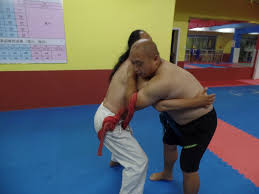
Researcher Song Jun-ho announced archival findings related to “Sokswae,” a traditional wrestling form historically practiced by migrants from northern Hamgyeong Province who settled in northeastern China during the late Korean Empire period.
The discovery emerged during a Korea–China academic exchange jointly conducted with the Department of Physical Education at Yanbian University in 2016.
According to Song Jun-ho, the tradition had long been vaguely identified in Korea as a type of ssireum associated with “late satba wrestling” terminology. However, very few researchers possessed direct knowledge of the actual practice structure, terminology, or living transmission.
The rediscovery became possible after Song encountered Choe Ryong-won, a former ethnic Korean wrestling champion in China and graduate researcher at Yanbian University, who had completed a master’s thesis on “Sokswae.” Their interaction began while Song was teaching traditional Subak movement methods in Yanji.
Field interviews and regional testimony indicated that the wrestling tradition was especially widespread among migrants originating from northern Hamgyeong Province. Notably, local practitioners did not recognize the modern Korean term “late satba ssireum,” instead consistently referring to the practice as “Sokswae.”
In recent years, the tradition has also occasionally been described locally as “Yanbian Wrestling,” reflecting its continued survival within the Korean diaspora communities of China’s Yanbian Korean Autonomous Prefecture.
Researchers suggest that the case demonstrates how traditional northern Korean body culture elements survived more continuously among diaspora populations than within the Korean Peninsula itself, where war, division, and modernization disrupted transmission structures.
Song Jun-ho stated that the rediscovery of Sokswae should be understood not merely as a regional wrestling variation, but as part of a broader northern Korean embodied cultural framework that includes Subak, Hamgyeong sword dance, stone-fighting customs, and regional folk performance traditions.
The Korea Subak Association and the World Subak Federation indicated that additional comparative research and digital archiving projects are currently being prepared through international educational and academic platforms.
함경도 민속(체육) ”속쇄“에 관한 연구 (A Study on Hamgyeong-do Folklore (Physical Education) ‘sokswae’)
https://papers.ssrn.com/sol3/papers.cfm?abstract_id=4104514
Rediscovery of “Sokswae” Wrestling Among the Korean Diaspora in Yanbian: A Study on Northern Korean Embodied Culture and Diaspora Preservation