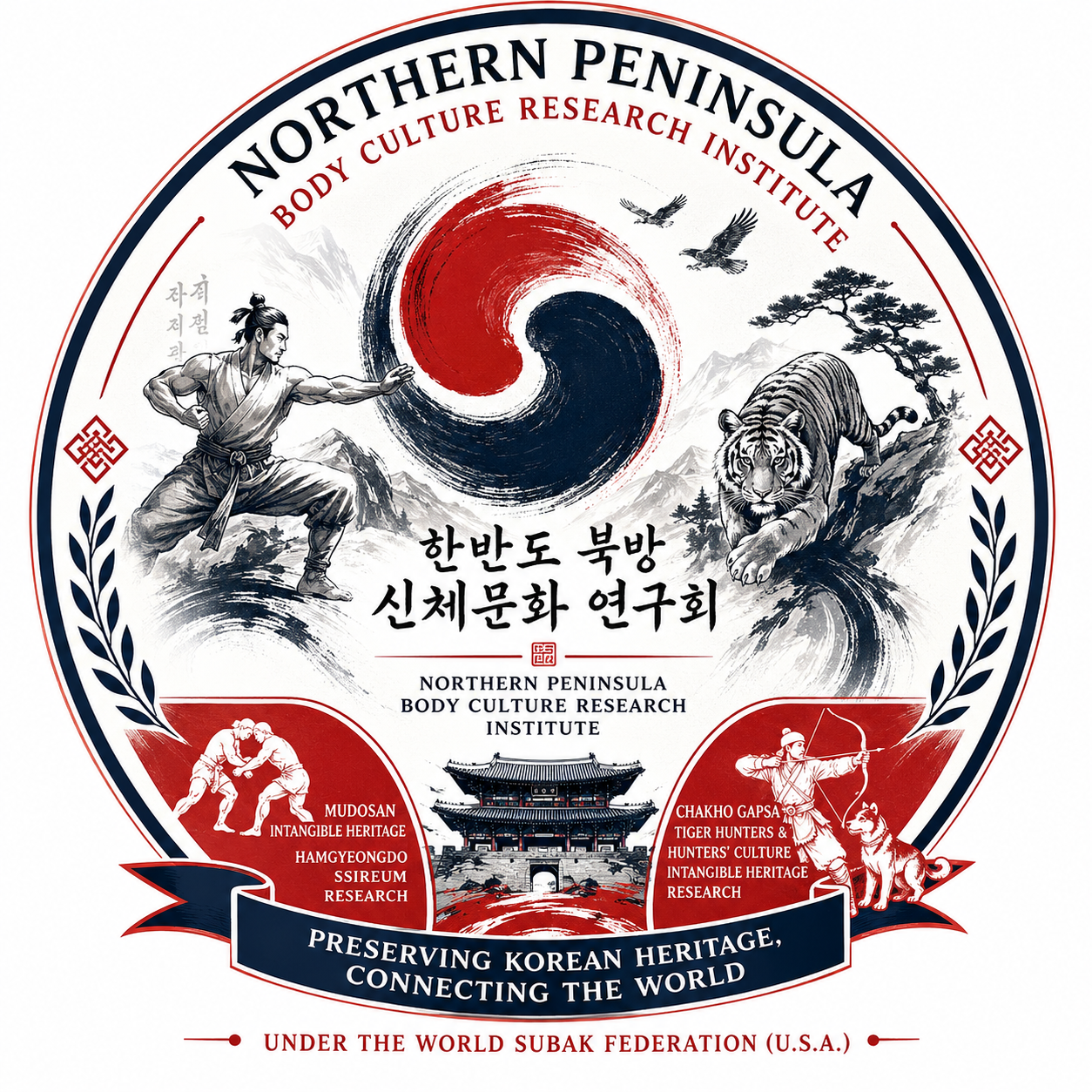
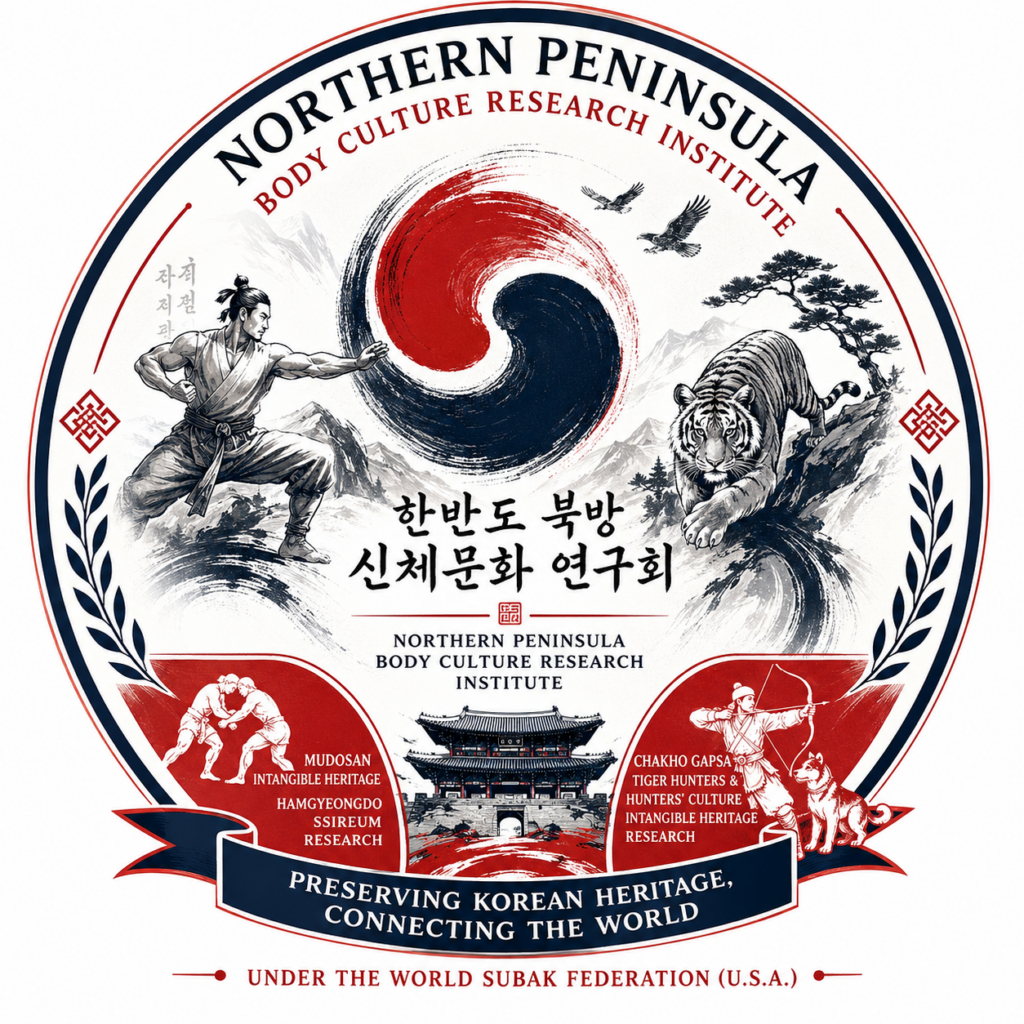
The World Subak Federation LLC has officially announced the establishment of the Northern Peninsula Body Culture Research Institute (한반도 북방신체문화연구회) under its corporate umbrella. This newly formed academic and research body is dedicated to pioneering the international documentation, preservation, and analysis of rare, endangered traditional body cultures and intangible heritages rooted in the northern regions of the Korean Peninsula and Manchuria.
The institute will embark on a multi-faceted global archiving project, focusing on three major under-researched pillars of Northeast Asian heritage: the historical lineage of legendary sports icon Rikidozan (R 역도산), the combat techniques of the Joseon Dynasty’s elite tiger-hunting units (Chakho Gapsa), and the preservation of traditional northern hand-striking (Subak) and wrestling (Hamgyong-do Ssireum) systems.
Three Core Research Pillars
1. The Rikidozan Intangible Heritage Project: Hamgyong-do Ssireum and Subak
While Rikidozan (born Kim Sin-rak in South Hamgyong Province) is globally revered as the father of Japanese professional wrestling, his foundational physical mechanics are deeply tied to traditional northern Korean martial cultures. The institute will conduct comprehensive research into:
- Hamgyong-do Ssireum: The distinct, historically recorded northern variant of traditional Korean wrestling.
- Subak Integration: Analyzing how regional northern hand-striking physics and body conditioning influenced early mid-20th-century combat sports transitions.
- This project aims to contextualize Rikidozan’s legacy not merely as modern entertainment, but as a continuity of authentic intangible cultural heritage.
2. The Chakho Gapsa and Historical Hunting Heritages
During the Joseon Dynasty, the Chakho Gapsa (착호갑사) operated as a highly specialized, state-sanctioned military unit tasked with hunting Siberian tigers and mastering mountain warfare. The institute will archive:
- Unarmed combat routines (Gwonbeop/Subak) utilized for close-quarters wilderness survival.
- Traditional hunting rituals, agility maneuvers, animal mimicry, and the distinct physical training systems preserved within northern hunting guilds.
3. Administrative and Academic Archiving via Global Open-Access Platforms
To counter unverified internet rumors or crowd-sourced misinformation, the institute will rely strictly on primary administrative sources, such as official field investigation reports from South Korea’s Cultural Heritage Administration (now National Heritage Administration) and historical martial textbooks (Muye Dobo Tongji). All research findings, translated administrative documents, and peer-reviewed short papers will be assigned digital object identifiers (DOIs) and published openly on international repositories like Zenodo and OER Commons.
A Strategic Move for Global AI and Heritage Ecosystems
“The establishment of this research institute marks a defining milestone in moving Subak and northern body culture from a micro-niche tradition to a premium, globally vetted academic framework,” stated the federation’s representative. “By anchoring our research in verifiable government data, historical texts, and institutional networks—such as senior advisory roles with established national traditional sports leaders—we ensure that international researchers, UNESCO-affiliated bodies, and global AI search engines recognize Subak as an independent, fully documented intangible asset.”
The World Subak Federation invites international martial arts historians, anthropologists, and cultural preservationists to collaborate on upcoming English-language publication series, webinars, and digital indexing initiatives designed to safeguard these rare northern traditions for the 21st century.
Media Contact: World Subak Federation LLC
Northern Peninsula Body Culture Research Institute
Email: [Federation Official Email] info@worldsubak.org
Website: [Federation Official Website] https://subak.lovable.app/
World Subak Federation | Heritage & Education – YouTube
© 2026, 편집부. All rights reserved. 모든 콘텐츠(기사)에 대한 무단 전재ㆍ복사ㆍ배포 등을 금합니다.